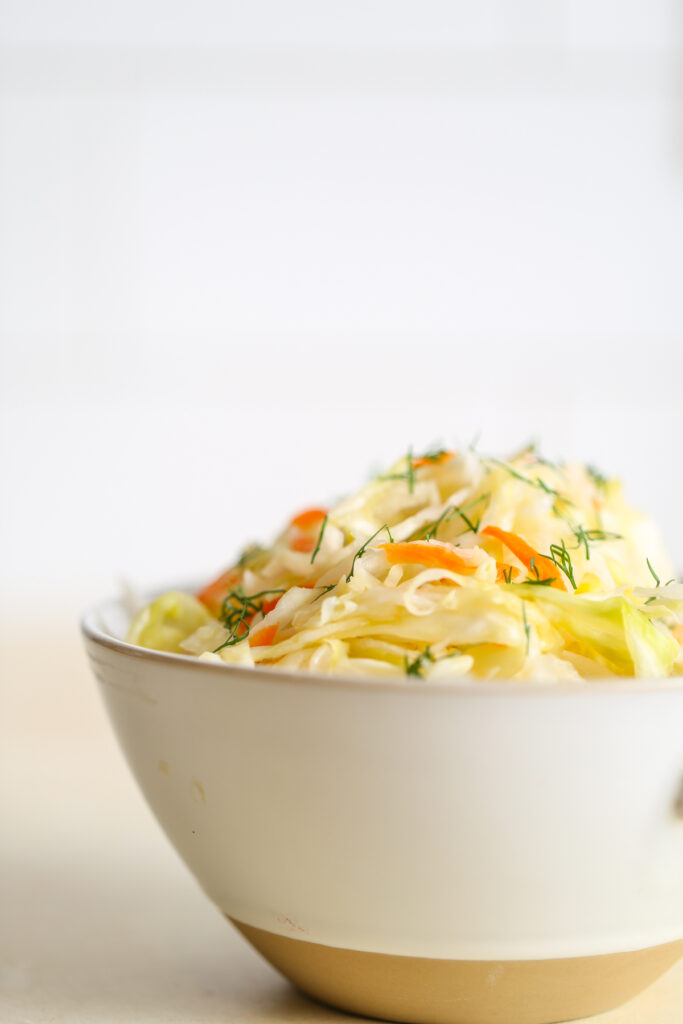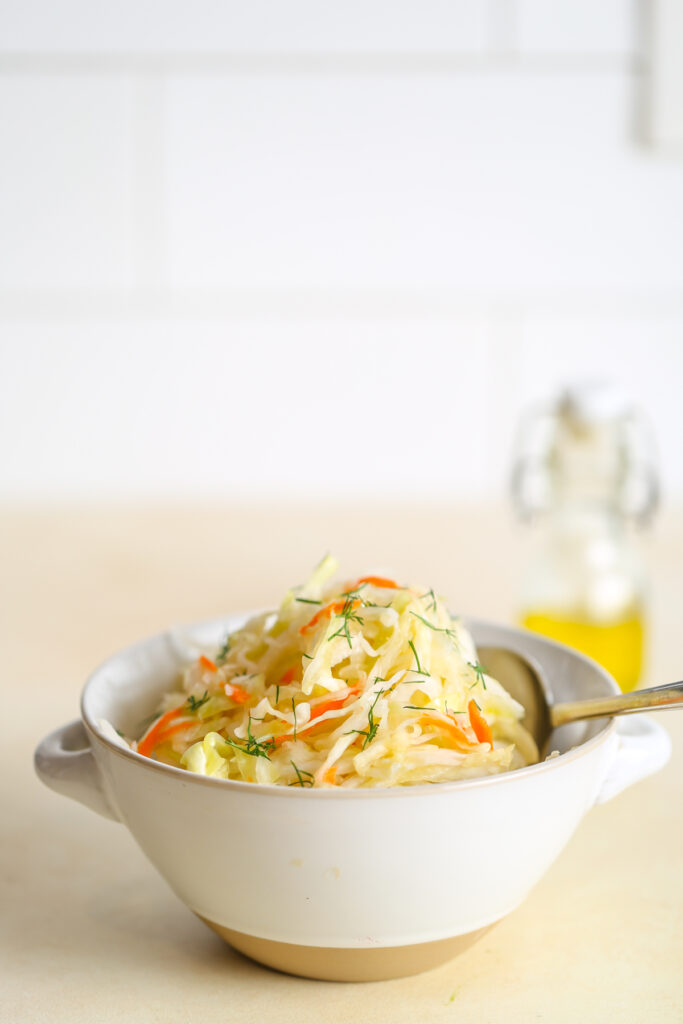

Traditional Sauerkraut (Fermented Cabbage)
Description
This traditional homemade sauerkraut is a true staple of Eastern European kitchens — simple, humble, and deeply nourishing. Made with crisp white cabbage, a touch of carrot, and just the right amount of salt, it naturally ferments into a tangy, vibrant dish full of life and flavor. As the cabbage slowly transforms, it develops its signature sour taste while becoming rich in beneficial probiotics.
The process is as important as the ingredients: massaging the cabbage to release its juices, packing it tightly, and remembering to pierce it daily to release fermentation gases — a small but essential step that keeps the flavor clean and prevents bitterness.
The result is a refreshing, slightly crunchy sauerkraut that pairs beautifully with potatoes, grains, or simple fasting meals. More than just a side dish, it is a time-honored superfood, cherished for supporting digestion, strengthening the body, and bringing balance during fasting periods.
Ingredients
Instructions
-
Prepare the cabbage
Remove outer leaves. Cut the cabbage into quarters, remove the core, and finely shred
-
Add salt and massage
Place shredded cabbage in a large bowl. Sprinkle with salt. Massage firmly with your hands for 5–10 minutes until it softens and releases plenty of juice.
-
Add shredded carrot
Mix in the grated carrot evenly.
-
Pack tightly
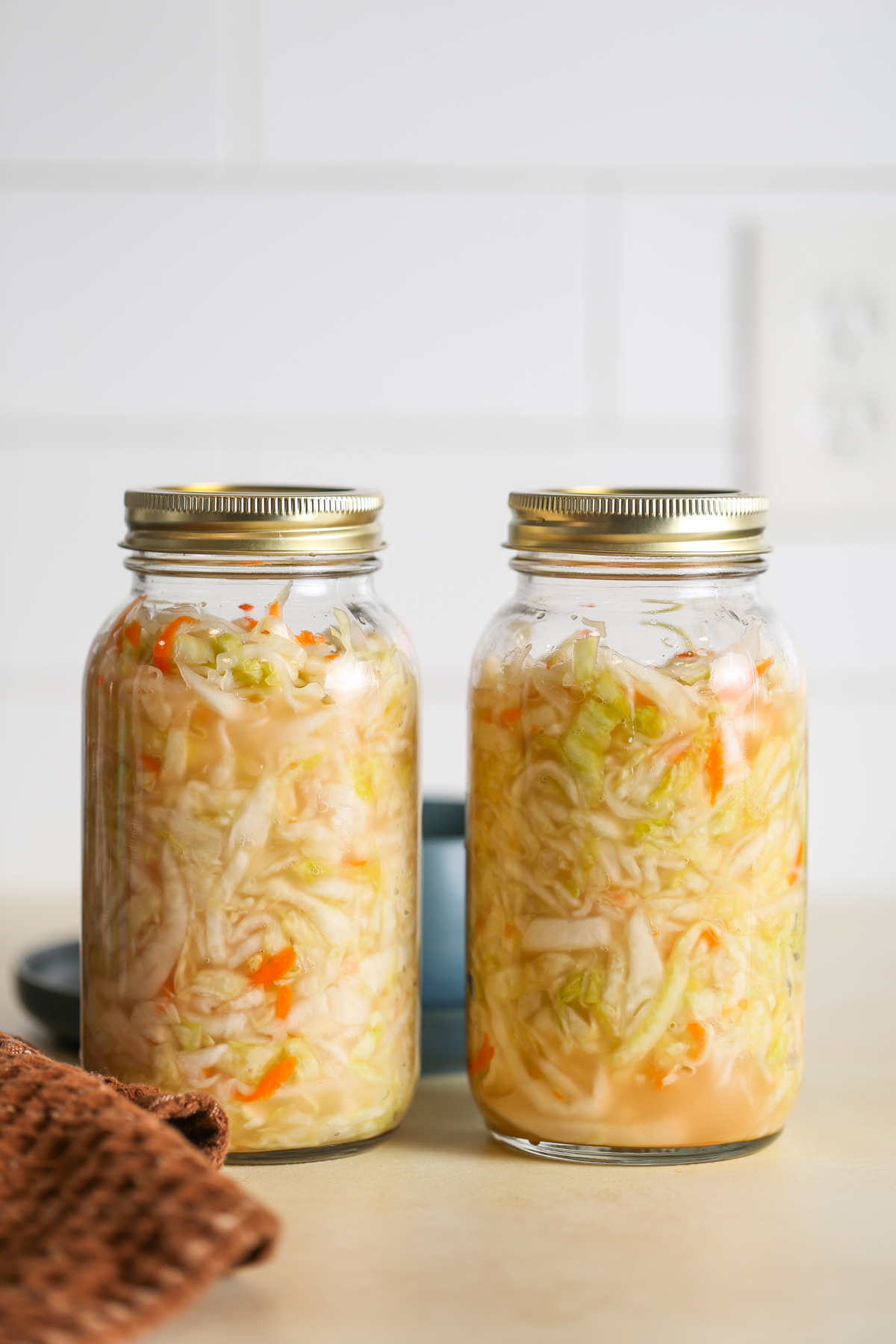
Transfer the mixture into a clean glass jar or fermentation crock. Press down firmly in layers to remove air and ensure the cabbage is submerged in its own liquid.
-
Weight it down
Place a small weight (or folded cabbage leaf + small jar) on top to keep everything submerged under the brine.
-
Ferment and release gases
Cover loosely and leave at room temperature (65–72°F / 18–22°C) for 3–7 days.
-
Very important: once or twice a day, pierce the cabbage all the way to the bottom using a clean wooden stick, skewer, or knife.
-
This releases trapped fermentation gases.
-
If you skip this step, gases can build up and give the sauerkraut a bitter taste.
-
Also press cabbage down daily to keep it submerged.
-
-
Taste and refrigerate
Start tasting on day 3. When it reaches your desired tanginess, seal and store in the refrigerator. It will keep for weeks.
Note
Why Sauerkraut is a Superfood
Sauerkraut is much more than a side dish — it’s a natural probiotic powerhouse:
- Rich in beneficial bacteria that support gut health and digestion
- Helps strengthen the immune system
- High in vitamin C, vitamin K, and fiber
- Naturally low in calories — great for balanced, weight-conscious eating
- Supports better nutrient absorption
In Eastern European and Balkan traditions, sauerkraut is cherished not only for its flavor but also for its healing, cleansing, and strengthening qualities, especially during fasting periods.